Cabinet Secretariat
Senate of Pakistan
News Detail
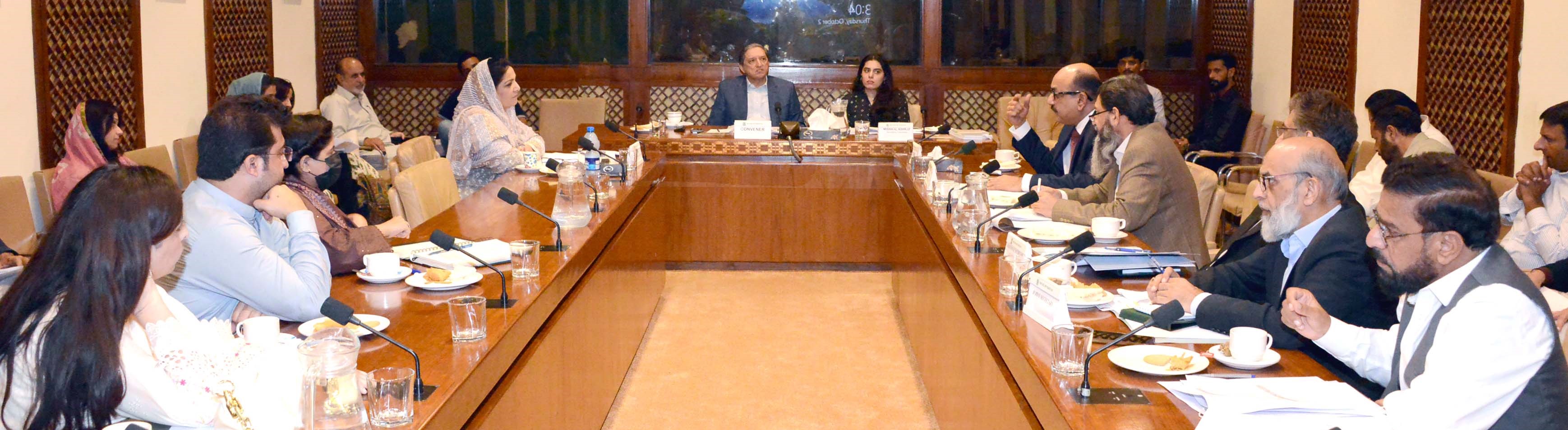
Press Release Title: Senator Saleem Mandviwalla Convener Sub-Committee of the Senate Standing Committee on Cabinet Secretariat Presiding over a meeting of The Sub-Committee at Parliament House Islamabad
Press Release Date: 2nd October, 2025
A significant meeting of the Sub-Committee of the Senate Standing Committee on Cabinet Secretariat was held today, Thursday, October 2, 2025, under the convener ship of Senator Saleem Mandviwala. Senator Anusha Rehman also attended the session. The committee undertook a comprehensive review of the Civil Service Examination system with a forward-looking agenda focused on structural reforms and inclusivity. The meeting featured robust discussions between members of the committee, representatives of the Federal Public Service Commission (FPSC), civil servants, and student associations, with a strong emphasis on revamping the civil services examination structure to meet the evolving needs of the 21st century. ### **Convenor Mandviwala: “Need to Restructure Exams to Meet Global Standards”** Senator Saleem Mandviwala stated during the meeting: We understand the need to restructure the civil services exams according to international standards and the latest needs. The purpose of this sub-committee is to build a consensus between students from all regions and backgrounds, and to bring ease and equity into the process. However, the competitive standard of the civil service exam must remain at the highest level.” Committee member emphasized that the civil service recruitment system must be modernized to reflect current realities, including the integration of new technologies such as artificial intelligence. A central point of debate was the proposal to extend the upper age limit for the CSS exam from 30 to 35 years. Students, particularly from underprivileged and rural areas, strongly advocated for this change, citing systemic educational delays, lack of access, and socio-economic challenges. Female aspirants also presented a compelling case for age relaxation, highlighting the impact of delayed education and familial responsibilities such as marriage during academic years. Age relaxation is not just a number—it’s a matter of equity and fairness for thousands who are left behind by systemic challenges,” noted several student representatives. In response, officials expressed concern that increasing the age limit might conflict with the requirement of inducting young and fresh talent into the civil service. A balance between experience and youthful potential remained a key area of deliberation. However students maintained to extend CSS upper age limit to 35 years to attract experienced professionals with practical expertise. Another major concern raised by the student community was the transition from 2-year to 4-year bachelor’s degrees post-2016. Students argued that this change effectively reduced their eligibility window, further reinforcing the case for age relaxation. The committee reviewed the conventional nature of the current testing system and exam content. The need to align the syllabus with modern realities—including artificial intelligence, digital governance, and global policy frameworks—was stressed. It was further suggested that the academic curriculum from primary to matriculation also needs revision to bring it in line with the expectations of civil services examinations. Also the method of testing should be revised It was further contended that revise eligibility timelines to address systemic delays in education and recruitment processes. Similarly the chairman committee stressed the filling of the vacant seats in particular the minorities seats. The students proposed that to expand the eligible talent pool to fill recurring vacancies in the civil service. The committee deferred final decisions to the next meeting and requested all student associations to submit their recommendations and demands in writing for formal consideration. The committee also noted that an inter-ministerial committee under the chairmanship of Federal Minister Ahsan Iqbal is simultaneously working on a national-level agenda to restructure and modernize the civil services examination. Senator Mandviwala assured participants that the grievances and suggestions of students will be forwarded to the relevant authorities. *Note to the editor* Given the widespread interest in CSS reforms and the future of thousands of aspiring civil servants, this meeting marks a pivotal step towards inclusive, fair, and modern recruitment processes. With systemic changes on the horizon, the Senate sub-committee's ongoing review holds national significance and is set to shape the future of Pakistan’s bureaucratic landscape.