News Detail
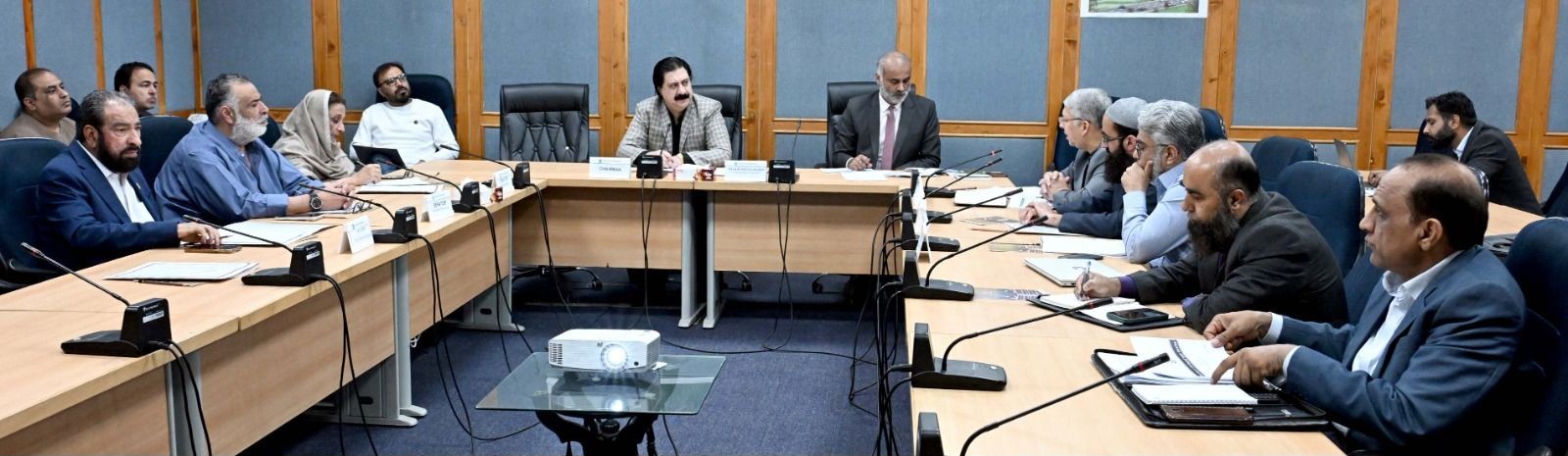
Event Title: Senator Manzoor Ahmed Kakar, presiding over a meeting of the Senate Standing Committee on Petroleum at Parliament Lodges Islamabad
Event Date: 2026-03-16
Senate Panel Examines Fuel Stock Position, LNG Supply Concerns Surface
The meeting of the Senate Standing Committee on Petroleum was held today in Islamabad under the chairmanship of Senator Manzoor Ahmed in the absence of the Chairman Committee, Senator Umer Farooq. The meeting was attended by Senators Jam Saifullah Khan, Saadia Abbasi, Mir Dostain Khan Domki, Hidayat Ullah Khan and Rana Mehmood-ul-Hassan, while Senator Amir Wali-ud-Din Chishti joined the meeting via Zoom link.
The Committee was briefed by the Secretary Petroleum on the current situation regarding the supply and availability of petroleum products. The Secretary informed the Committee that several neighboring Gulf countries are currently facing disruptions in petroleum supply due to the ongoing war in the region. He further stated that the availability of oil tankers has also become a major challenge, as ship owners are reluctant to offer their services under the prevailing circumstances.
The Committee was informed that Pakistan imports around 25 percent of its crude oil, 30 percent of diesel and nearly 70 percent of petrol, primarily through the Persian Gulf via the Strait of Hormuz. The Secretary cautioned that if the war prolongs, Pakistan may have to adopt longer shipping routes to ensure the supply of petroleum products.
While briefing the Committee about alternative arrangements, the Secretary informed that Pakistan has recently been allowed to purchase Russian oil after sanctions were temporarily eased for one month from March 11 due to the emerging global situation. However, he noted that Pakistan currently lacks established banking channels for such transactions and the procurement process takes around 35 to 40 days. He further explained that large Russian oil tankers cannot directly berth at Pakistani ports due to size limitations; therefore, the oil is first transported to Oman and then shipped onward to Pakistan.
The Secretary assured the Committee that the government is making all possible efforts to stretch the existing petroleum stocks in order to avoid any potential crisis. He also informed that the Prime Minister has constituted a high-level committee under the chairmanship of the Finance Minister to monitor the situation on a daily basis. The Oil and Gas Regulatory Authority (OGRA) has also been directed to monitor petroleum stocks and prices on a daily basis.
The Committee was informed that Pakistan currently has approximately 392 thousand metric tons of crude oil in stock, with a daily consumption of around 36 thousand metric tons. Diesel reserves stand at about 404 thousand metric tons, with a daily consumption of 19 thousand metric tons, while petrol reserves are around 564 thousand metric tons, with a daily consumption of around 20.6 thousand metric tons. The Committee was also informed that the ongoing threshing season increases the demand for diesel across the country and the Ministry/ OGRA will ensure the continuity of petroleum products.
Chairing the meeting, Senator Manzoor Ahmed raised concerns regarding the recent increase in petroleum prices on the existing available stocks. He questioned whether the government could avoid placing an additional financial burden on the people of Pakistan and sought clarification regarding the stock position and prices prior to March 7, the extent of the price increase, the taxes imposed, and the beneficiaries of the increase.
Responding to the concerns, the Secretary Petroleum rejected the notion that Oil Marketing Companies (OMCs) were benefiting from the price hike. The Secretary stated that the price adjustment was made partly to prevent panic buying and hoarding in the domestic market. He further informed the Committee that international diesel prices have increased significantly from around 28 dollars per barrel to approximately 88 dollars per barrel due to the prevailing geopolitical situation.
The Committee was also informed that the government is considering several policy measures to manage fuel consumption. These include proposals to facilitate two-wheelers and three-wheelers and the possible implementation of an odd-even vehicle policy on roads if the situation deteriorates further. The Secretary added that disruptions in global oil supply have already affected approximately 60 percent of India’s and 40 percent of China’s oil supply routes.
Senator Saadia Abbasi expressed concern over the delay in finalizing arrangements for the import of petroleum products from Russia and highlighted that the recent increase of Rs.55 in petroleum prices has severely affected the lives of ordinary citizens.
The Committee was further informed that Pakistan currently has two LNG supply arrangements with Qatar, known as Qatar-I and Qatar-II, under which nine LNG cargoes are normally received each month. However, the Secretary informed that Qatar has issued a force majeure notice to Pakistan due to the ongoing conflict, resulting in a reduction in LNG shipments.
The Committee was informed that while two LNG cargoes arrived at the beginning of March, six additional cargoes could not reach Pakistan due to the prevailing war conditions. At present, Pakistan has LNG reserves sufficient only until mid-April. The Secretary also informed the Committee that LNG supply to the power sector may be curtailed from March 30, which could potentially result in electricity load shedding in the country.